The rapid growth in the commercial solar energy industry motivates firms to search for solutions that provide maximum efficiency, reliability, and return on investment. Microinverter technology is a developing alternative to the standard string inverter. Microinverters convert DC to AC one solar panel at a time. This technology brings many operational benefits and financial advantages, which is why most solar projects for B2B customers focus on microinverters. This article analyzes microinverter benefits, value to energy production, and the performance improvement of solutions like BENY in commercial and industrial settings.
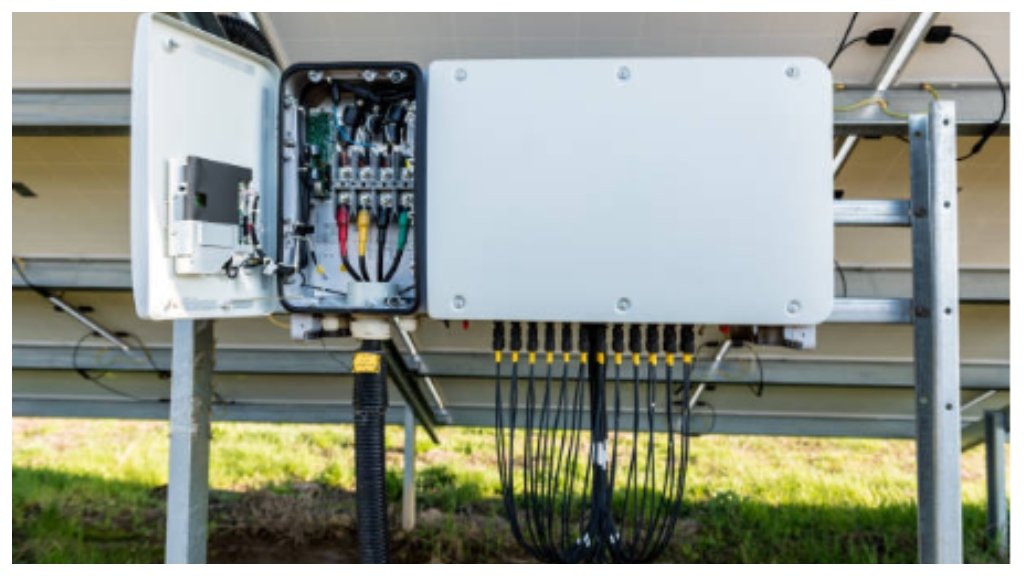
Microinverters are small inverters placed on individual solar panels. In contrast to standard string inverters, who bundle together the power coming from several panels before converting it to AC, microinverters enable each panel to function separately. This design offers numerous benefits for solar commercial and industrial solar projects.
For B2B companies, the autonomy of each panel is especially important. In a string inverter system, the lowest-performing panel can limit the output of the entire string, thus reducing overall efficiency. In contrast, microinverters ensure that each panel contributes its maximum potential, which improves energy yields. Moreover, panel-level monitoring, made possible by microinverters, helps operators track, diagnose, and troubleshoot performance issues, which streamlines maintenance and improves system reliability.
Improved Energy Harvesting and Effectiveness
The ability of microinverters to boost energy production, especially in challenging and partially shaded environments, is one of their most notable strengths. In commercial applications, panels are frequently arranged on roofs that slope in different directions and have obstructions that cause shading. Under these conditions, a traditional string inverter would have no means to compensate for these variations, which means the performance of the whole string is most often set by the weakest panel.
Microinverters solve this by offering independent panel power conversion, which allows each panel to perform at its best, regardless of shading and tilt. This results in higher energy output and a quicker return on investment for businesses. The energy gains for industrial-scale projects are significant, which is why microinverters are an efficient and economical choice for increasing solar ROI.
In addition, microinverter technology diminishes the energy losses that arise out of panel mismatch and wiring issues. Since each panel works independently, the whole array is protected from a single panel’s performance problem. With this modular design, uniform energy harvesting and dependable performance are guaranteed throughout the system’s lifetime.
Reliability and Safety Advantages
For commercial and industrial solar projects, reliability is a major consideration. Microinverters systemize reliability by decentralizing the conversion process. Only the impacted panel is disabled when a microinverter fails, so the entire system continues to function, unlike string inverters, where lots of panels go offline, triggering energy loss and expensive downtime. Microinverters also boost safety. String inverters operate at high DC voltages that can cause deadly accidents, but microinverters work at lower DC voltages. This is critical in solar installations on commercial rooftops, large solar farms, and industrial facilities, where safety and compliance to laws are paramount. By minimizing high-voltage exposure, microinverters enhance operational safety and simplify the installation and maintenance of the system to high-voltage system procedures.
Flexibility in System Design and Expansion
The ability to design a solar power system without major design constraints is a benefit attributed to microinverters. While string inverters typically require PV panels to be installed in the same orientation, microinverters allow the installation of PV panels in different angles and positions without compromising overall system efficiency. This is of great value to B2B customers whose roofs come with challenging solar installation configurations, odd building layouts, and multiple sites with different arrangements for PV system installations.
Moreover, microinverters allow solar arrays to be self-contained for easy expansion. When enterprise energy consumption increases, additional solar panels can be installed to increase solar power generation without the need to redesign the system to be more efficient. The ability to increase power generation without compromising system design efficiency boosts the value of a solar installation. For enterprises that are likely to have multi-site solar deployments to comply with solar project phasing, this characteristic of microinverters greatly improves flexibility for system design.
Advanced Monitoring and Predictive Maintenance
For commercial operators, maintaining the performance of a system and minimizing downtime is made possible through system monitoring and predictive maintenance. Captured data through microinverters provide real-time, granular monitoring of each solar PV panel, along with efficiency scores and possible performance issues to be flagged for attention. The detailed insight of each solar panel allows facility managers to quickly analyze the system performance, identify the underperforming modules, and quickly respond to shading or debris situations through maintenance.
In contrast to systems with string inverters that limit diagnostics to the string level, microinverters offer actionable data that makes proactive management possible. This data allows companies to lower operational costs, lengthen the life of their solar arrays, and enhance energy output. Predictive maintenance made possible by microinverters also addresses the problem of unreliability caused by unexpected breakdowns, thus ensuring uninterrupted energy for industrial use.
Cost Considerations and Long-Term Value
Microinverters do incur greater costs than string inverters, but their theoretical value and total energy worth make them justifiable. The energy productivity, availability, dependability, and maintenance costs of systems add worth to the investment and ultimately lead to greater ROI.
For these reasons, the value makes sense, particularly for B2B organizations. The increased energy productivity and lower operational downtime directly correlate with reduced energy costs and uninterrupted operational flows, thus lower risk. Additionally, companies with microinverters often qualify for tax-exempt solar projects due to their solar-powered systems and other incentives aimed at sustainability.
Integrating solutions such as BENY Micro Inverters™ to commercial and industrial projects increase those benefits. BENY Micro Inverters™ are able to optimize the performance of panels, ease the process of monitoring, and ensure the seamless conversion of energy to varying quality over multiple installations. For B2B customers, this translates to dependable performance and design of the system and a streamlined path to meeting desired sustainable and cost-efficient goals.
Environmental and Sustainability Benefits
By increasing overall energy yield, Micro Inverters improve the environmental performance of a solar system by decreasing the energy losses of a system and overall carbon footprint. More energy yield means less installed capacity to achieve operational energy demand, thus using fewer raw materials.
Furthermore, Micro Inverters allow businesses to preserve other renewable energy sources and improve the output of energy generated from each solar panel by monitoring and adjusting each panel’s performance. Micro Inverter systems provide the transparency and efficiency businesses need to meet their sustainability goals. These benefits increase the return on investment for environmentally responsible companies and make Micro Inverters an environmentally encouraging system to implement.
In conclusion, microinverters present a compelling alternative to string inverters when technology is considered for B2B solar projects. Microinverters allow each solar panel to function individually; therefore, they provide increased energy harvesting, higher reliability, improved safety, and greater design flexibility. The ability to monitor system performance on an individual panel basis and predict maintenance helps lower operational costs and increase performance. The overall financial and environmental benefits further enhance the ROI.
Including microinverters provides high-performance solar solutions for businesses, especially advanced options like BENY microinverters. This technology improves operational efficiency, helps meet environmental goals, and aligns solar energy infrastructure with future market demands. Companies can enhance their competitive position in today’s energy-focused market. Click here for more information.